
An Indian Mail-and-Plate Cuirass
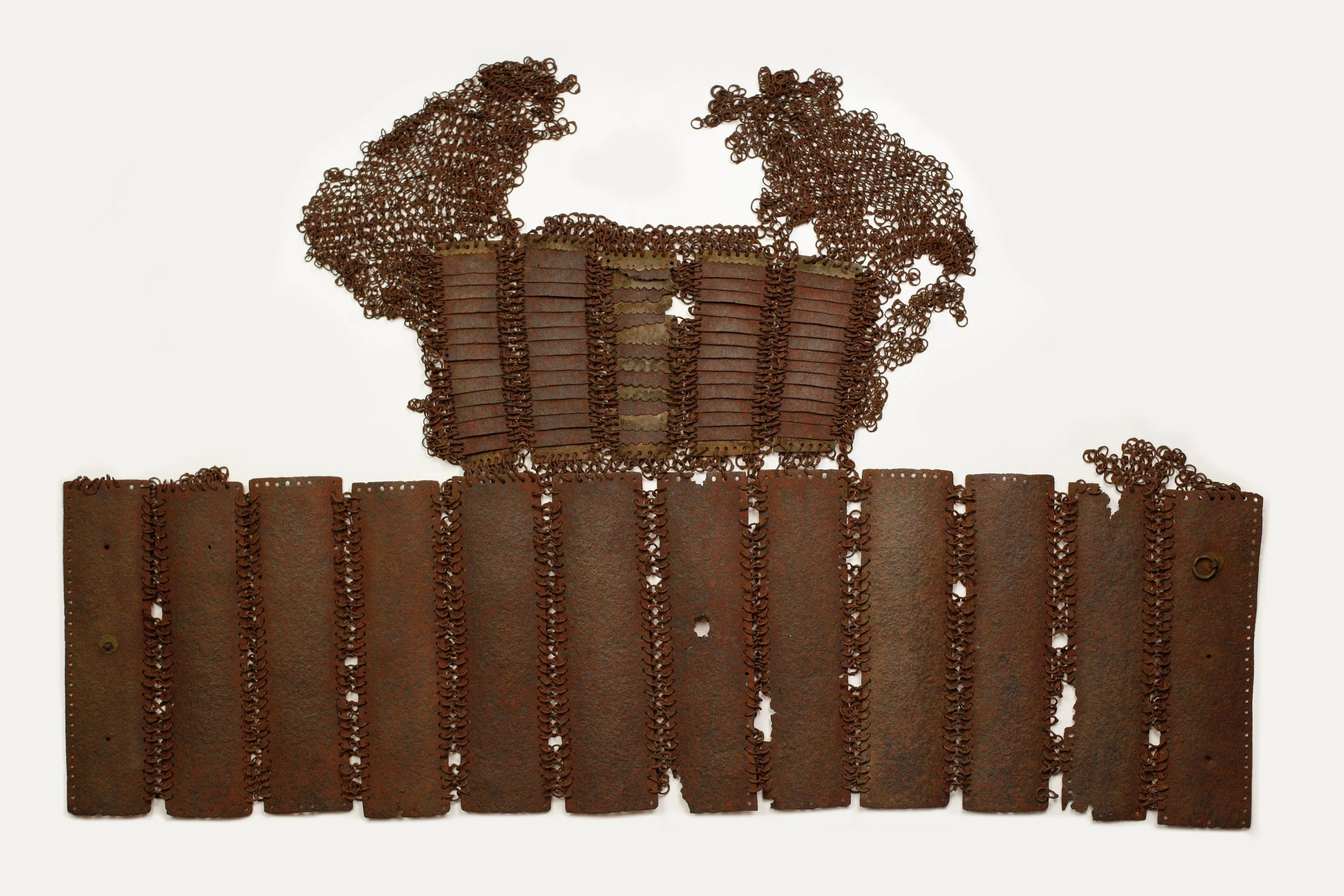
Aside from bazubands or dastanas—and the occasional kula khud helmet—antique armour is notably scarce on the market. It is little wonder, then, that many collectors focus primarily on arms like tulwars, tabars and kards that are more easily sourced. When armour does appear in a collection it often marks a turning point: a shift towards building something more complete, where historical weapons are no longer the whole story, but form part of a broader martial context.
This piece sits firmly in that category. Its condition does little to diminish its appeal and, if anything, I feel that it reinforces its authenticity. It is, unmistakably, a connoisseur’s piece—one that would reward careful display. Unfortunately, as I continue to reorganise things here at Chez Forde, space has become a premium, and so this offers a good opportunity both to explore the subject of antique armour and to pass it on to the next custodian.
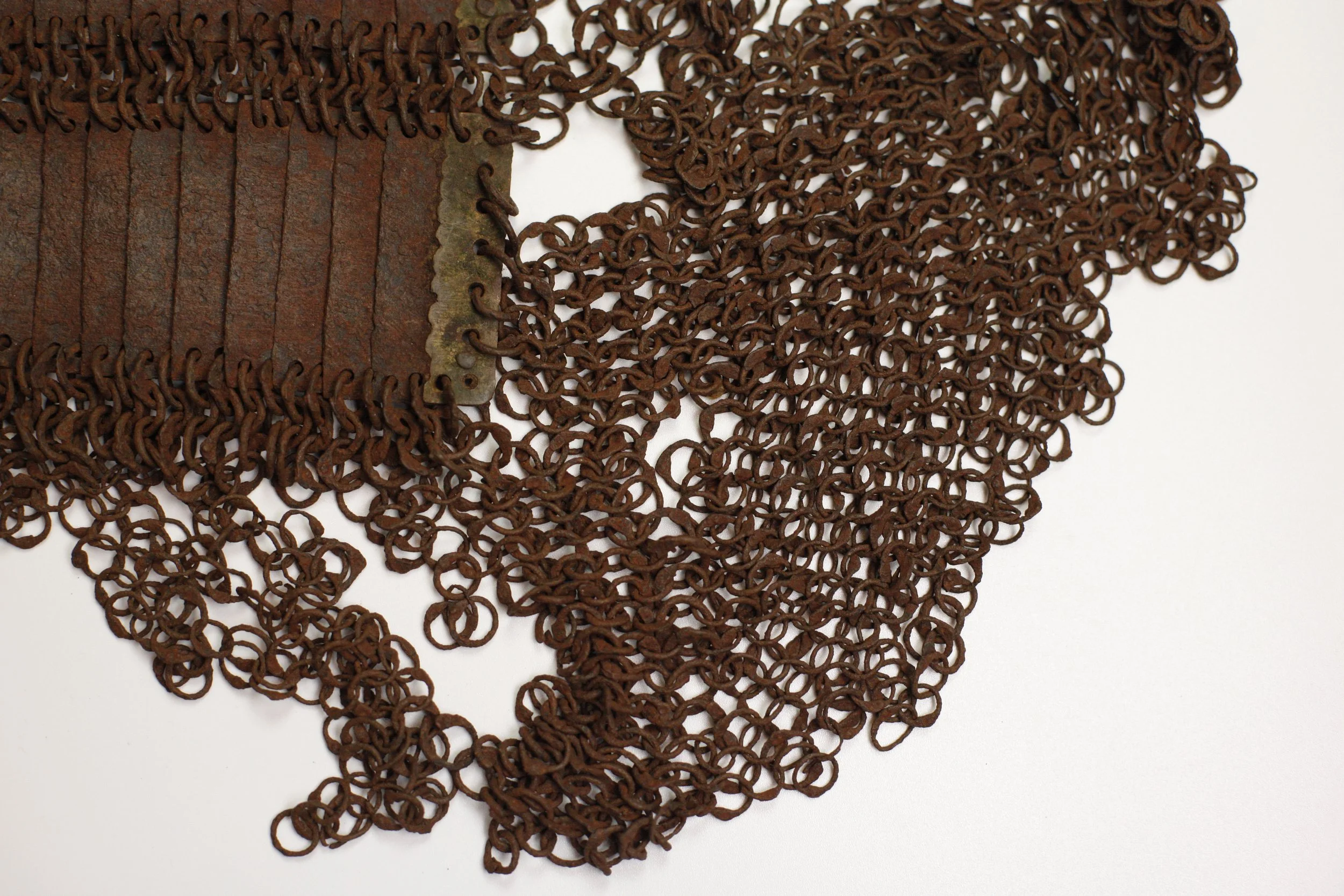
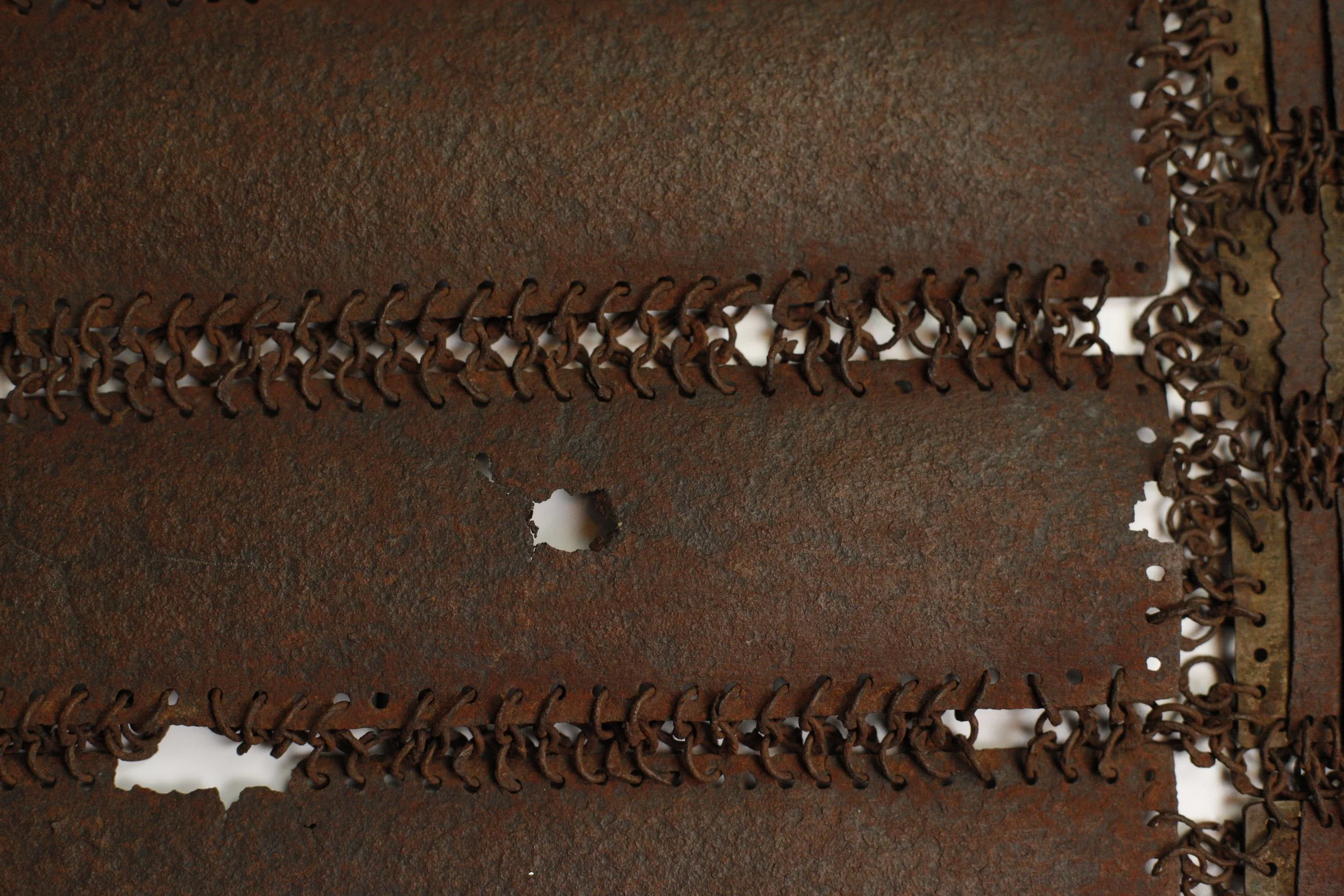
Plate-and-mail armour of this kind was used with vim across a wide geographical span, from the Middle East through to the Ottoman Empire and into Persia, and surviving examples can be found in museum collections worldwide, naturally. This particular cuirass is constructed from twelve large, slightly curved plates arranged side by side and linked by hundreds of hand-made mail rings, allowing it to wrap closely around the warrior’s torso. At the front, it would have come together and been secured with lacing threaded through six copper-alloy loops.
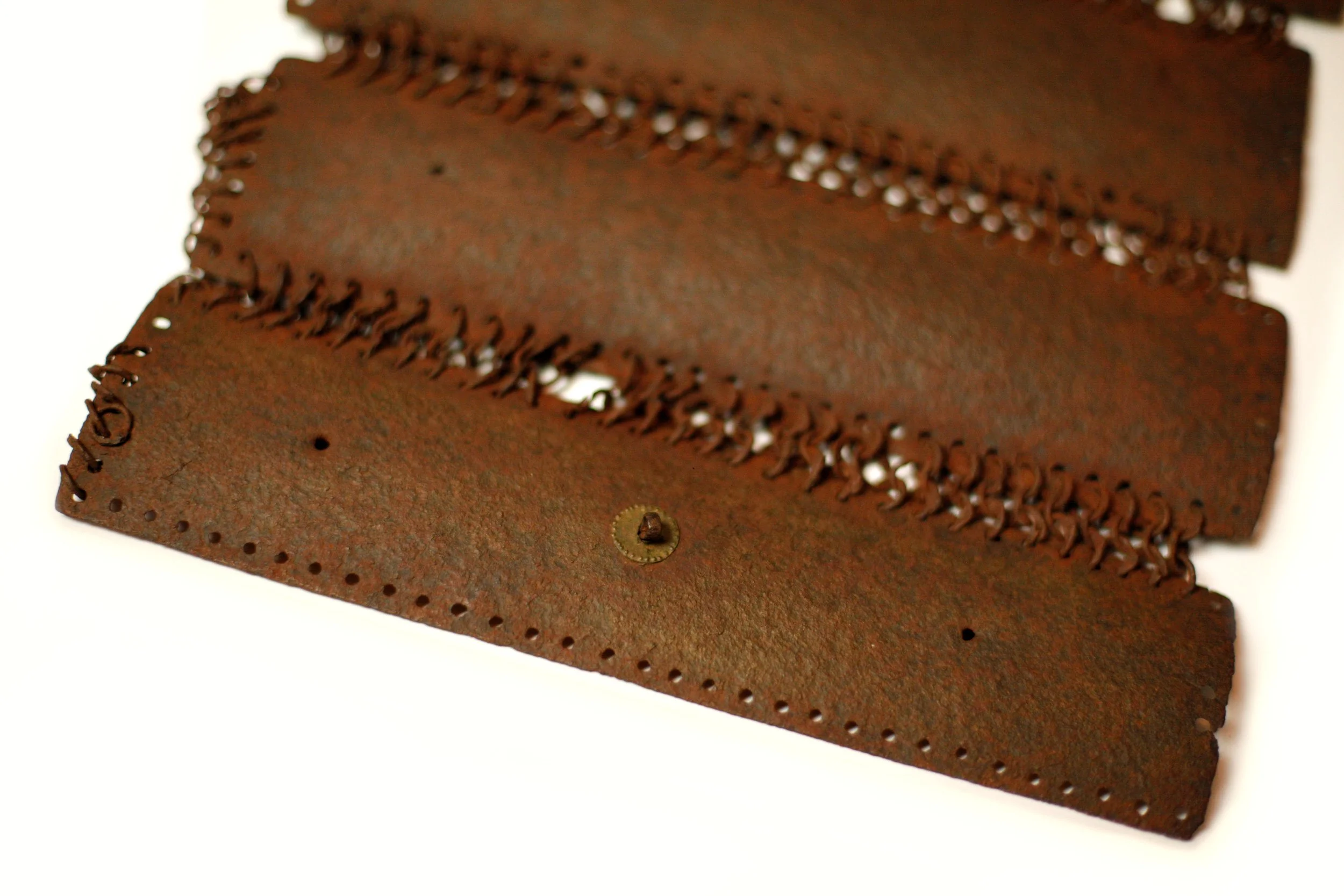
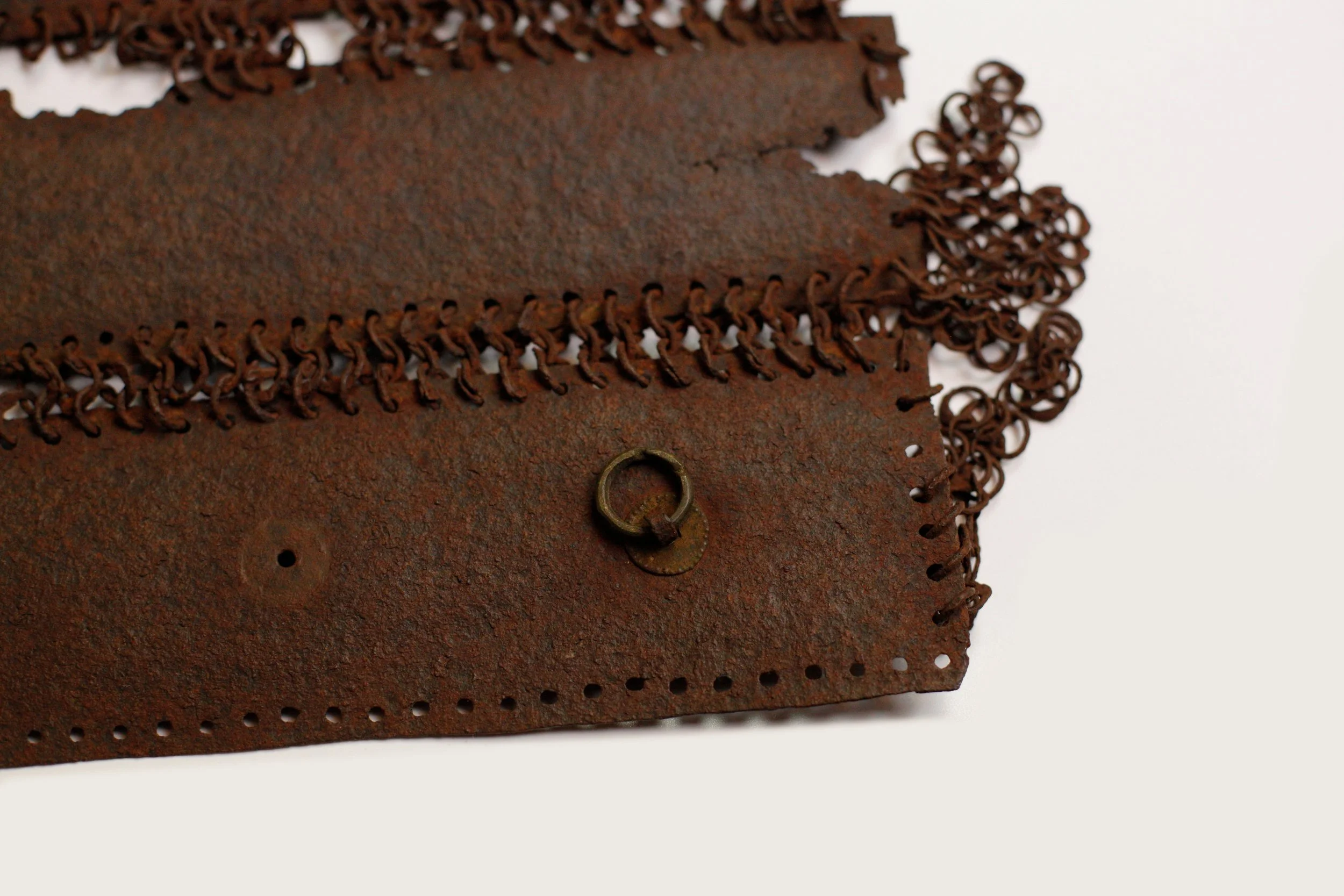
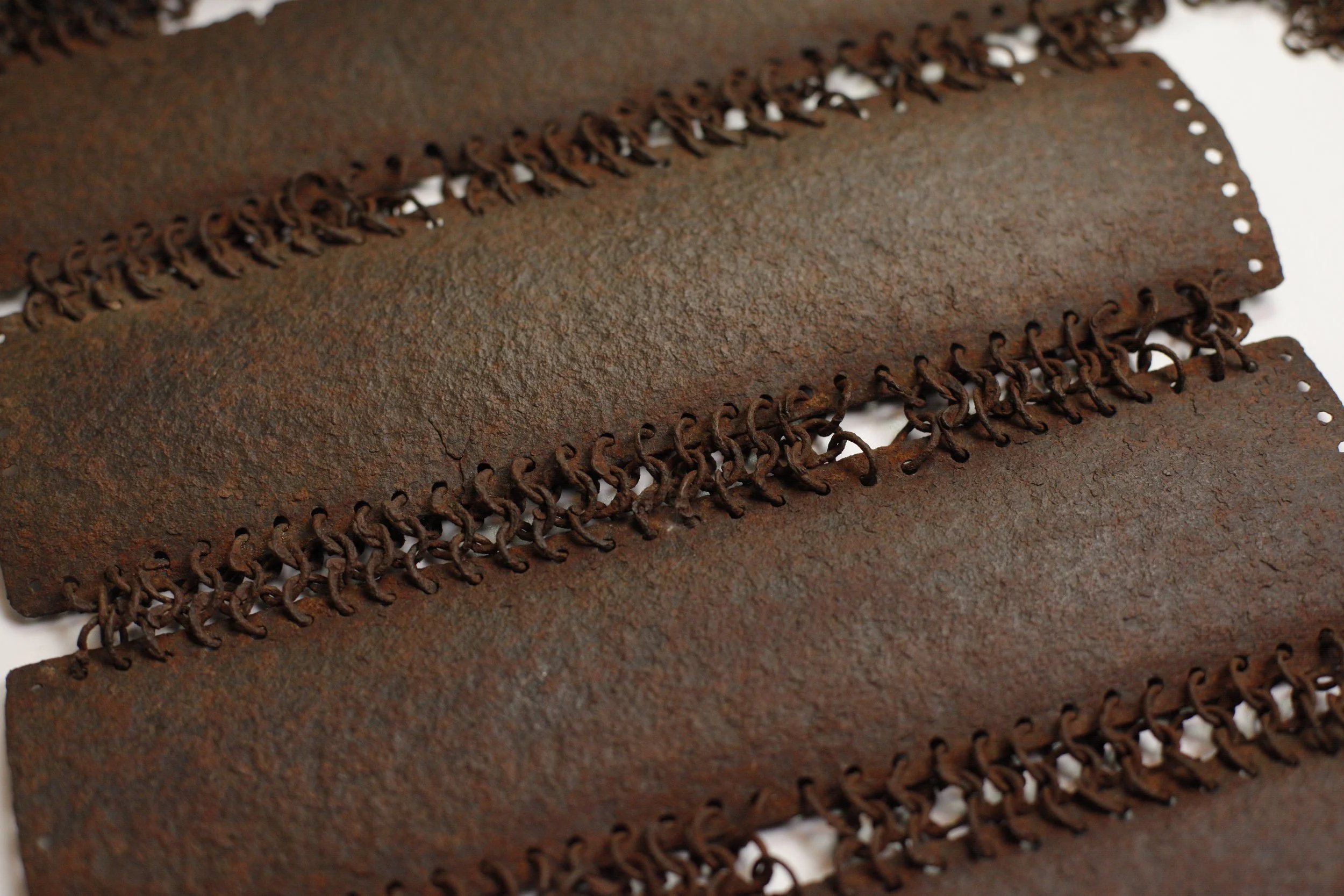
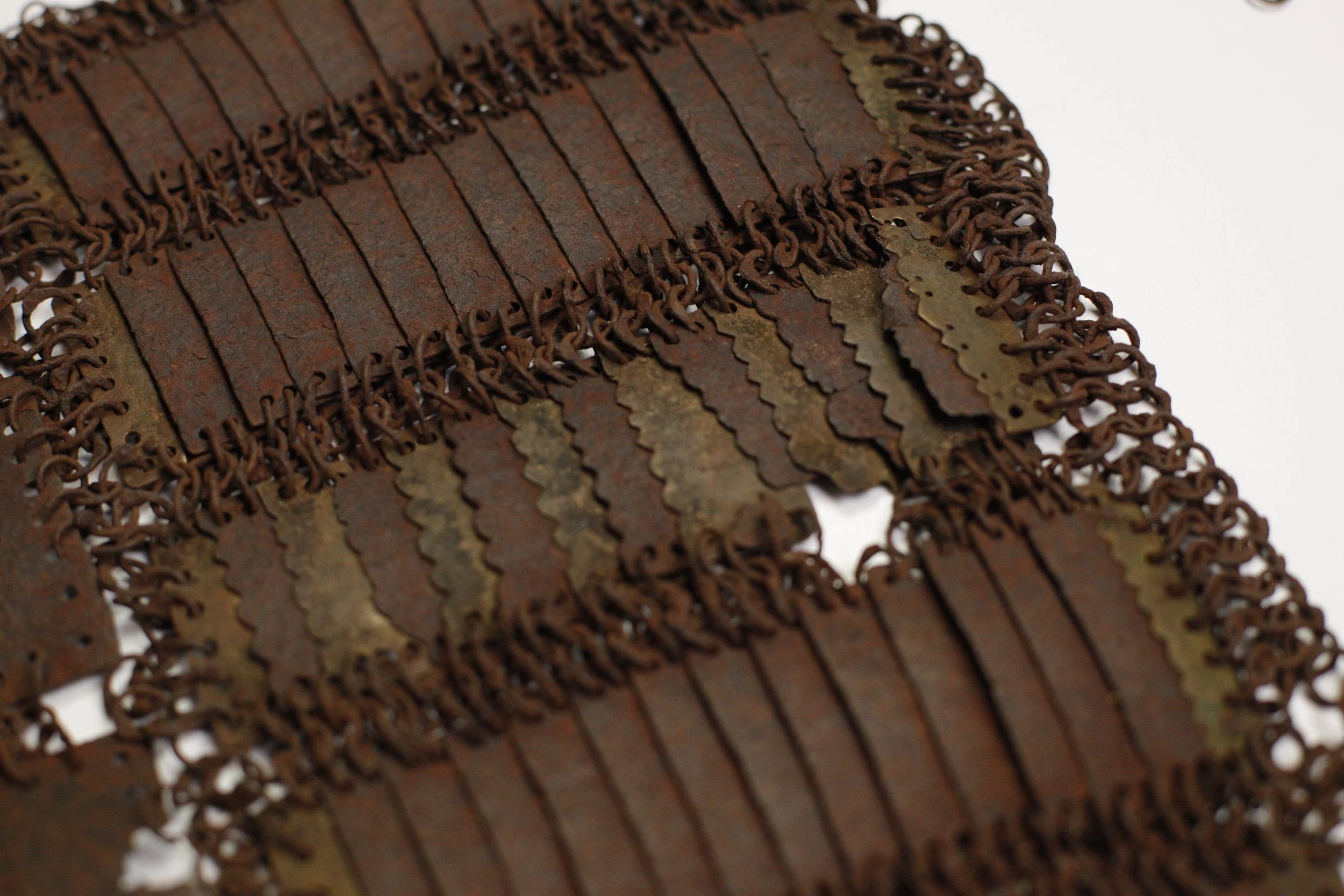
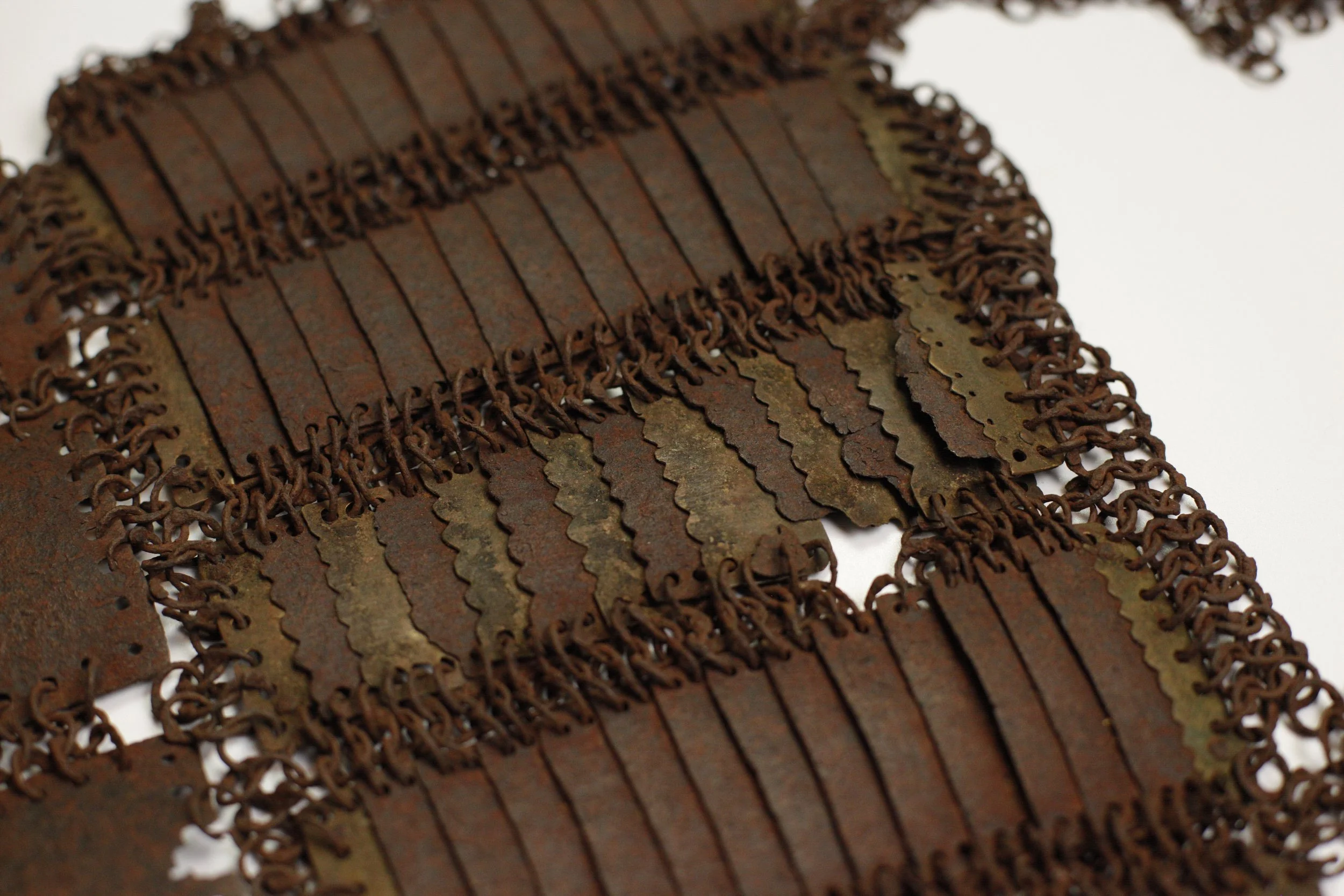
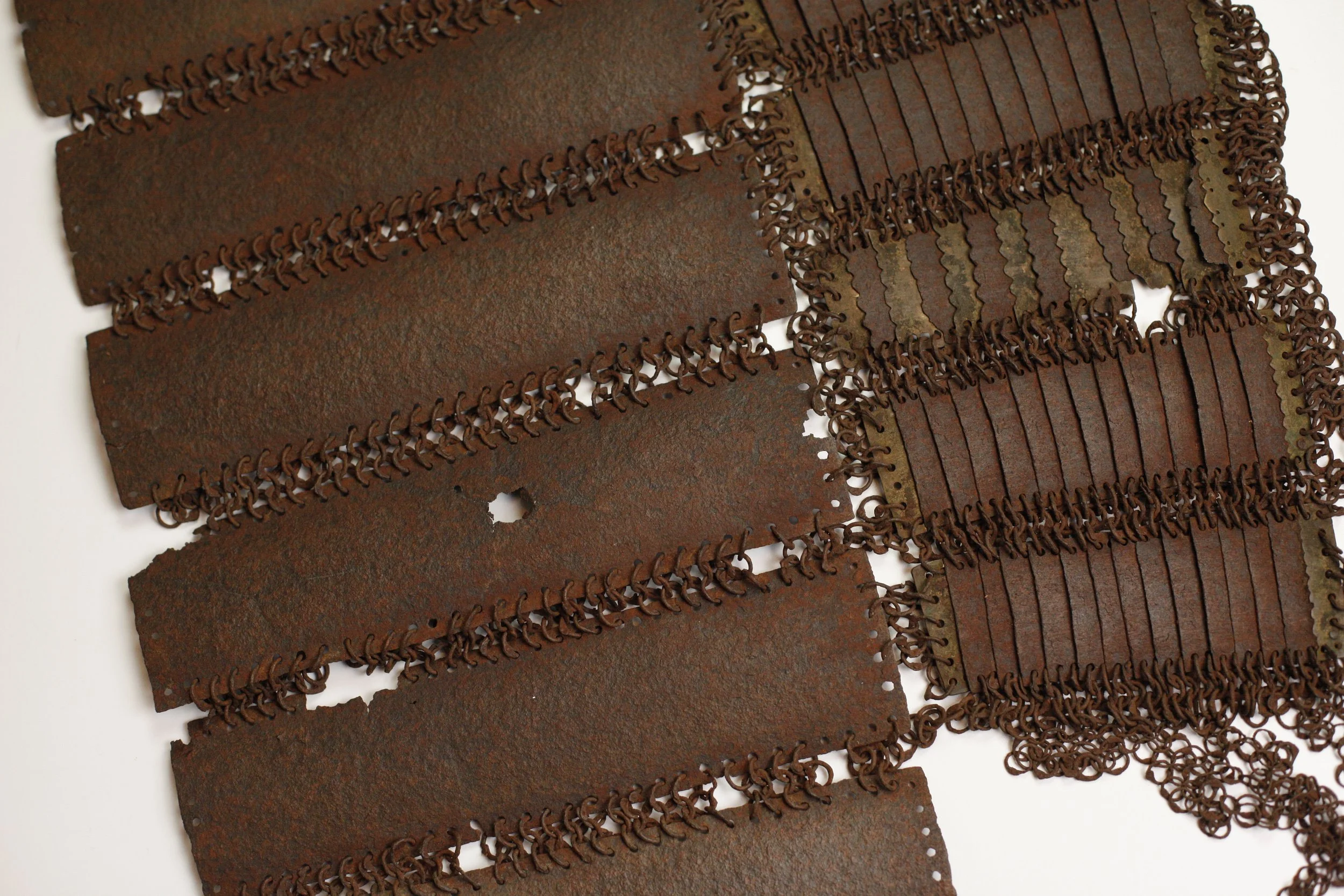
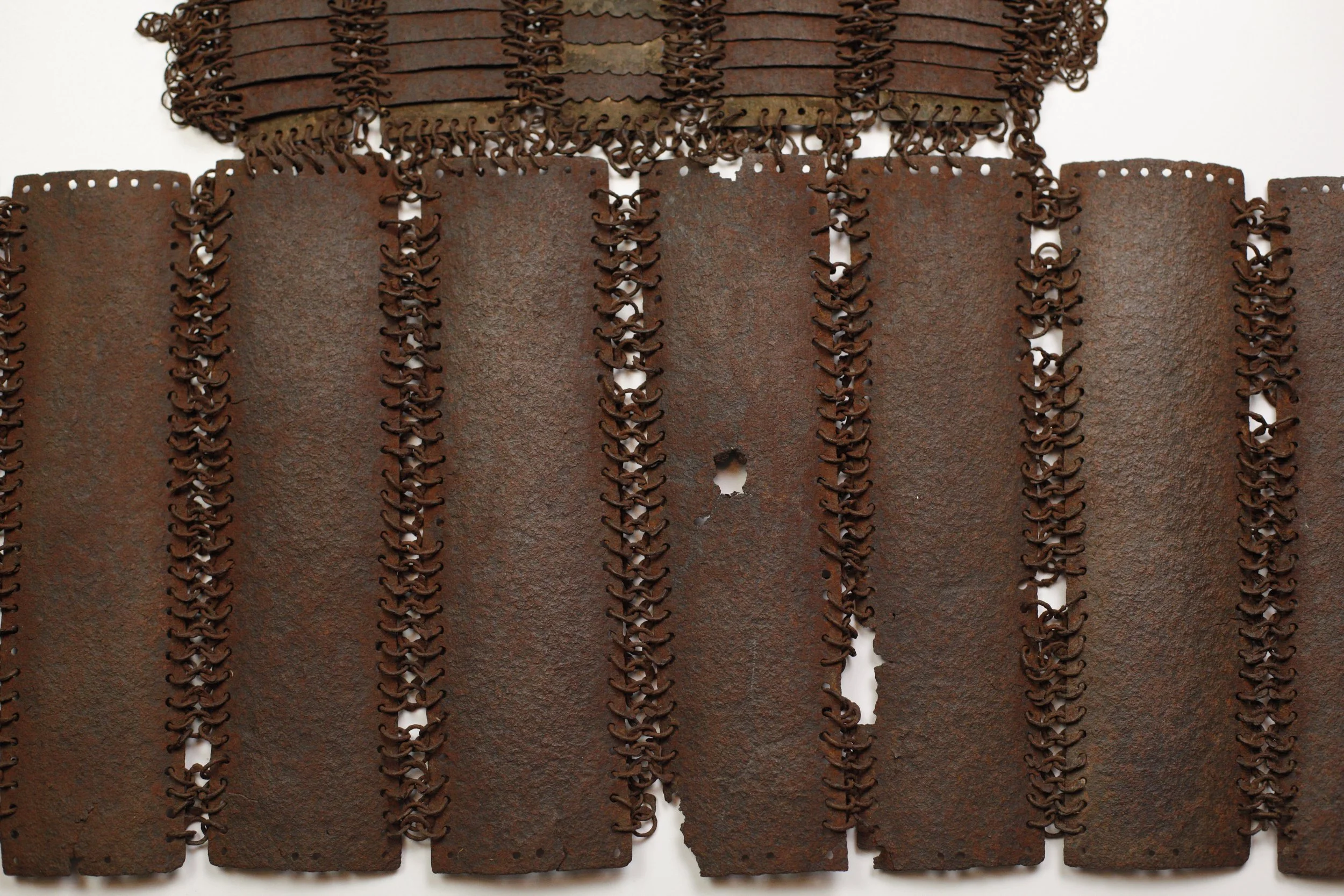
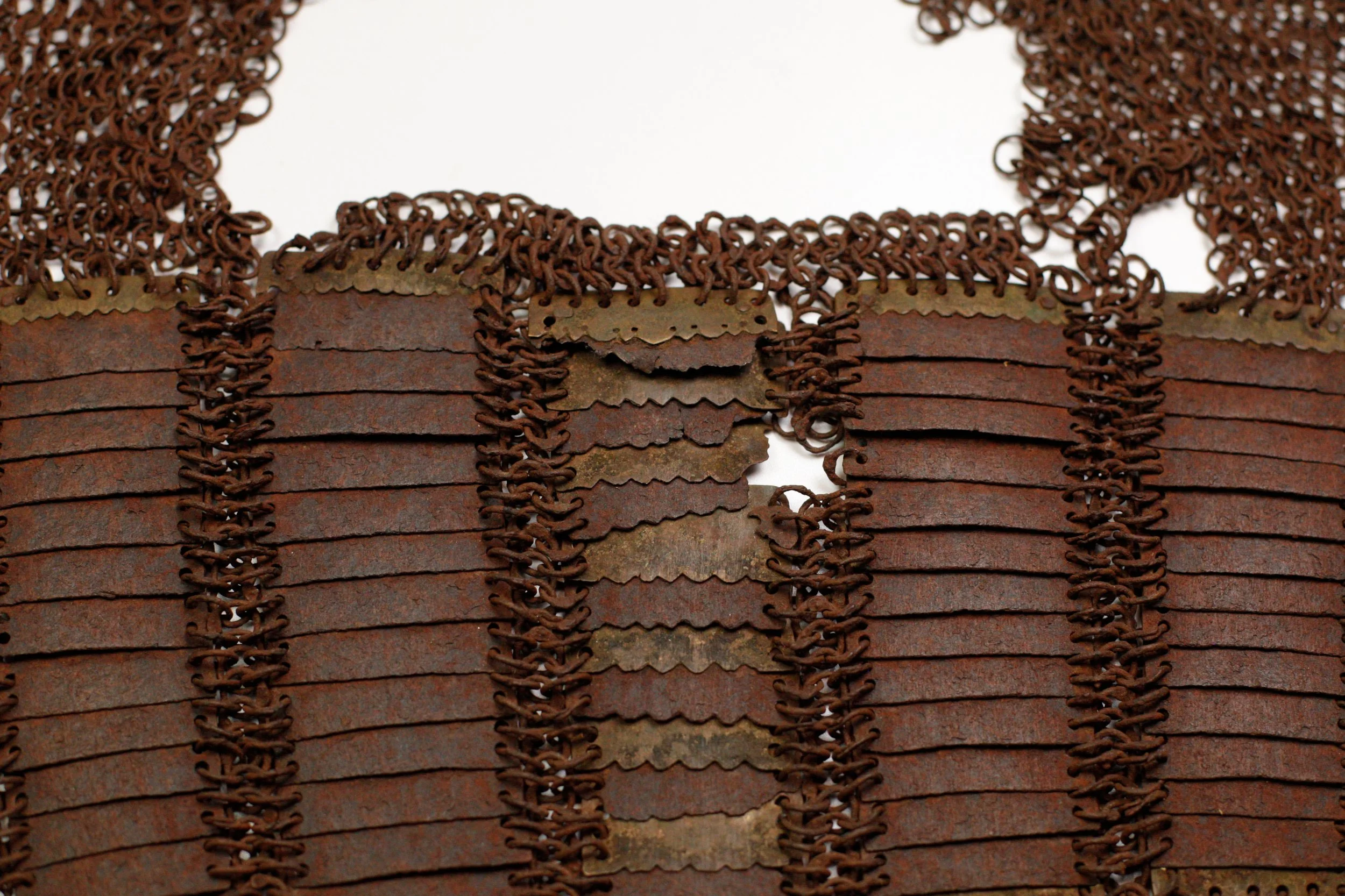
Above these main plates are vertical rows of smaller plates—often described as splints or lamellae—each overlapping the next and again joined by riveted mail. Some of these small plates are made of copper alloy, designed to stand out in its day, and several display scalloped edges, lending both texture and a visual rhythm to the construction.
Comparable features can be observed in a helmet in the Pitt Rivers Museum, Oxford, probably dating to the eighteenth century and taken from Seringapatam in 1799, where similarly scalloped, overlapping plates appear. Another example (currently on the market, attributed to Sikh workmanship) is offered at auction in Spain with an estimate of €3,000, shares related characteristics. Further parallels can be drawn with the famous elephant armour in the Royal Armouries, Leeds, and the Mughal horse armour (object number XXVIH.18) in the Asian Gallery—both of which employ dense arrangements of small plates linked by mail.
The closest comparison, however, is the well-known Sindh mail-and-plate set of armour in the Metropolitan Museum of Art, New York, dating to the late eighteenth or early nineteenth century. That example, originating from what is now modern-day Pakistan, is particularly notable for its completeness and decorative richness. Armour of this type was likely influenced by Turkish and Persian traditions, though Indian cuirasses are more commonly formed from four large plates, making this multi-plate construction relatively unusual and often linked to Sindh. In Oriental Armour, H. Russell Robinson suggests that such Sindh armours were also associated with the city of Bhuj.
A particularly telling detail lies in the mail itself: every ring on this cuirass is riveted. This was a far more labour-intensive and costly method than the use of butted rings, but it provided significantly greater durability and protection. It is a strong indicator that this was not a purely ceremonial piece, but one intended for genuine combat use by someone of means. The considerable weight of the armour only reinforces that conclusion.
If you’d like to add this to your collection then please send me a message. Shipping within the UK is included in the sale price, and international shipping can also be arranged.
Dimensions: 92cm across by 43cm high. This is not including the mail.
Each of the large plates are 26cm by 7cm.
£1175