
A Rare Balochistani ‘Hisfar’ Shield
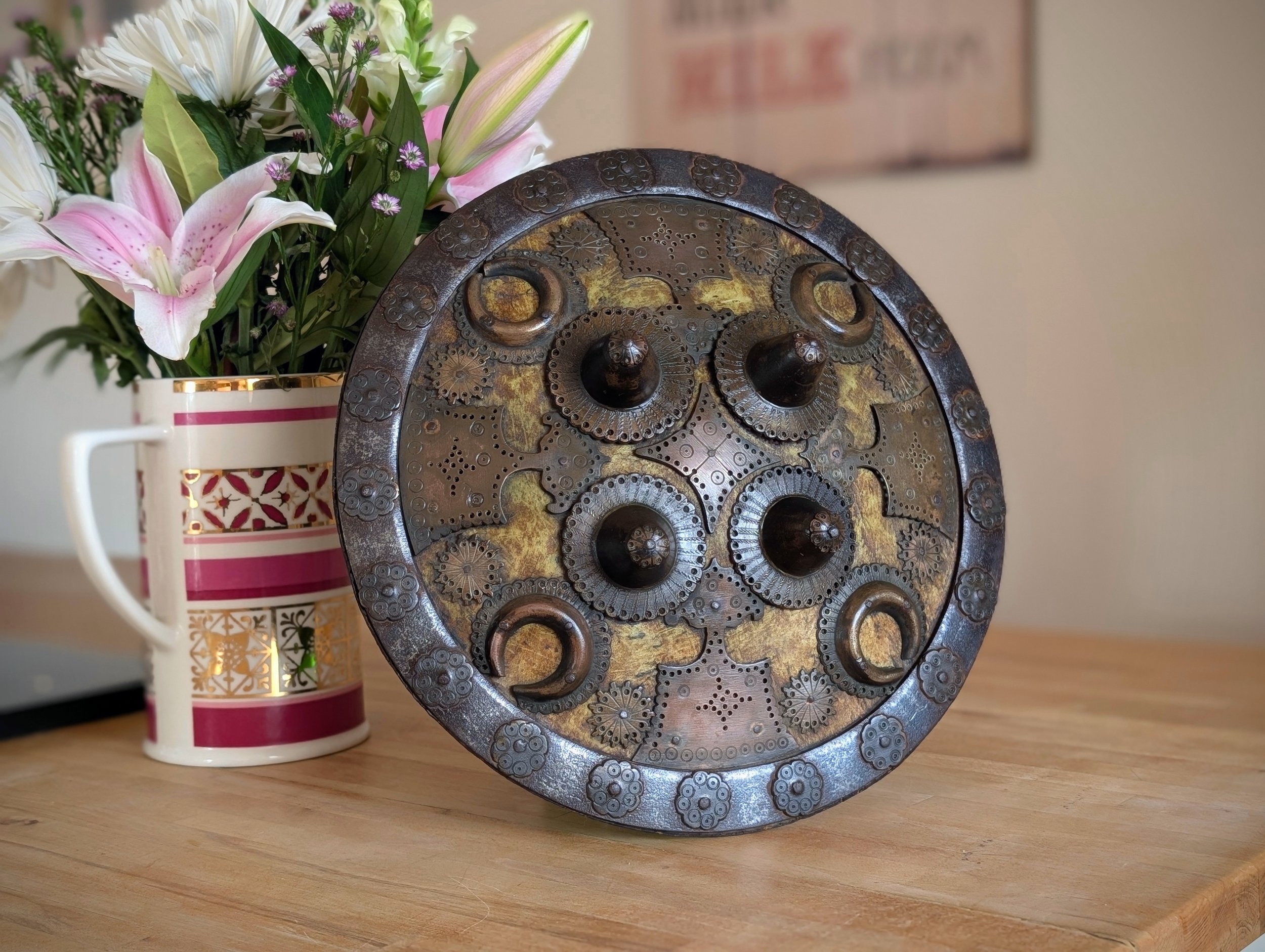

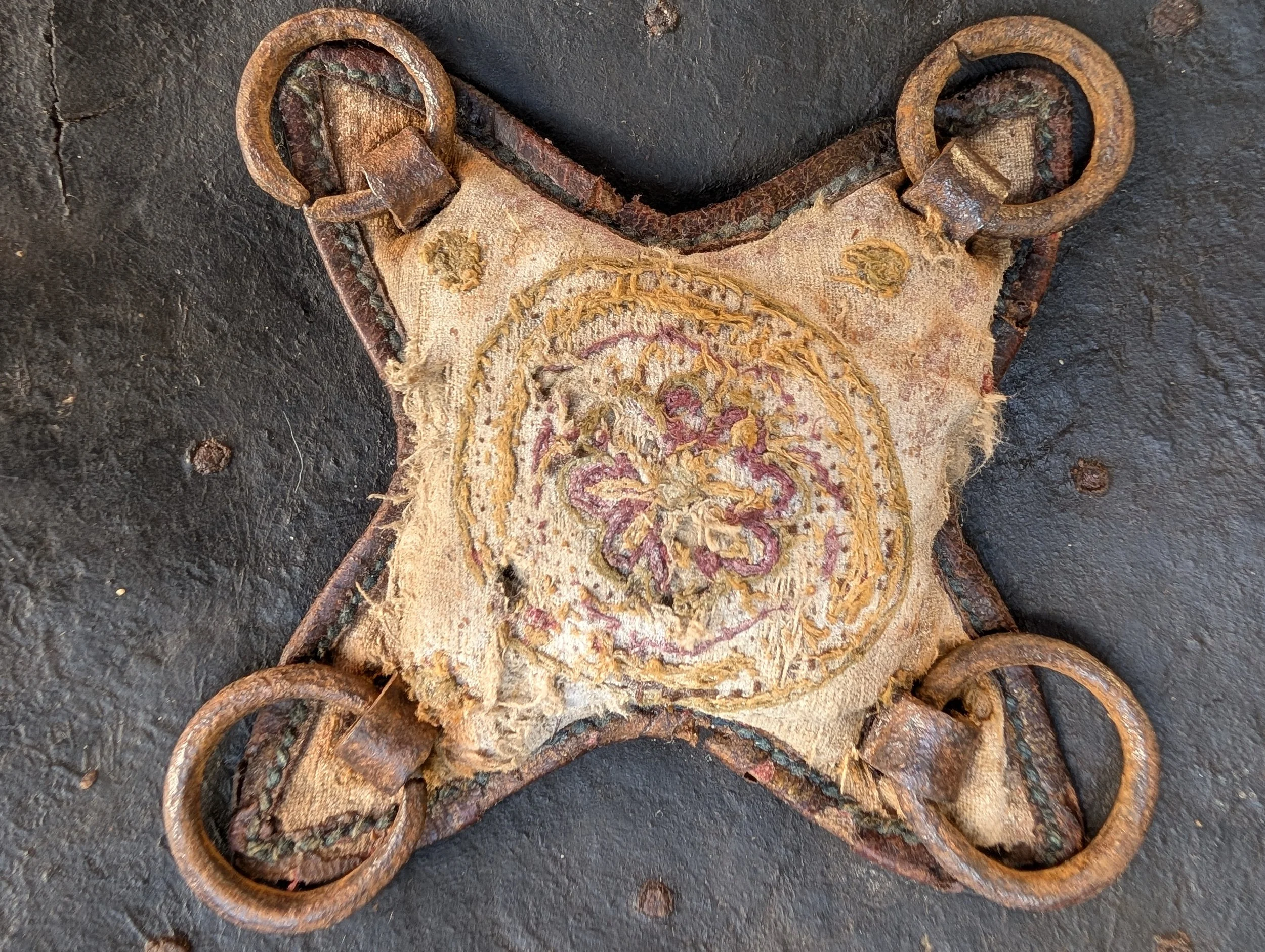
This antique shield is especially notable for its identical twin in the Metropolitan Museum of Art, New York.
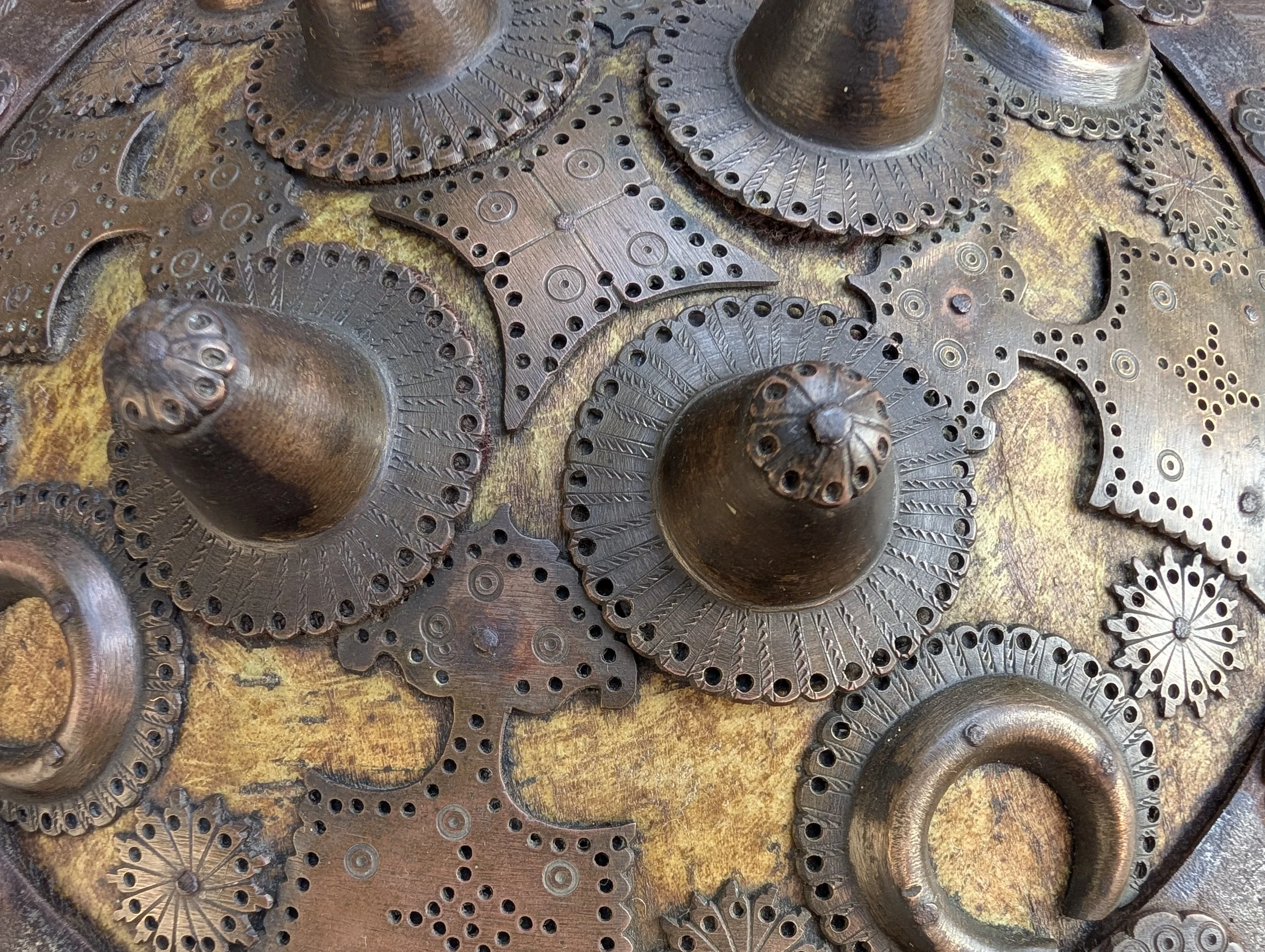
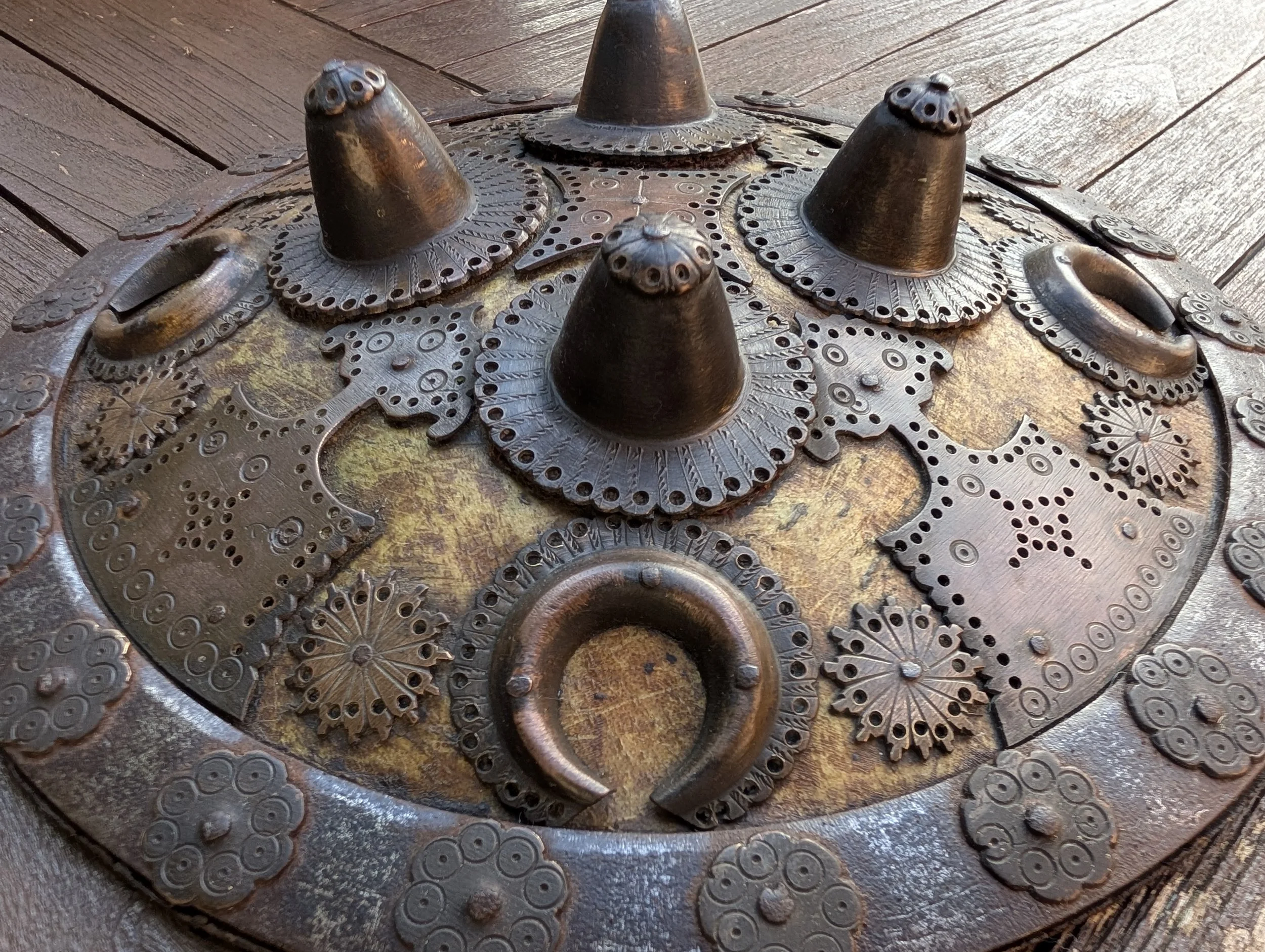
Crafted from tough hide and clad in plates, this buckler-style shield survives from some time in the 1800s, and is made primarily from tough, light-coloured hide covered in an abundance of copper alloy plates, four bosses, and reinforced by an iron rim. Leather pads cushion the metal plates against the hardened hide, and the decorated original knuckle-pad. The example offered for sale here has been sympathetically cleaned, oiled and remoisturised. Dust, grime and active rust have all been neutralised or removed and the shield’s condition now shows that desirable status of being clean yet displaying genuine age.
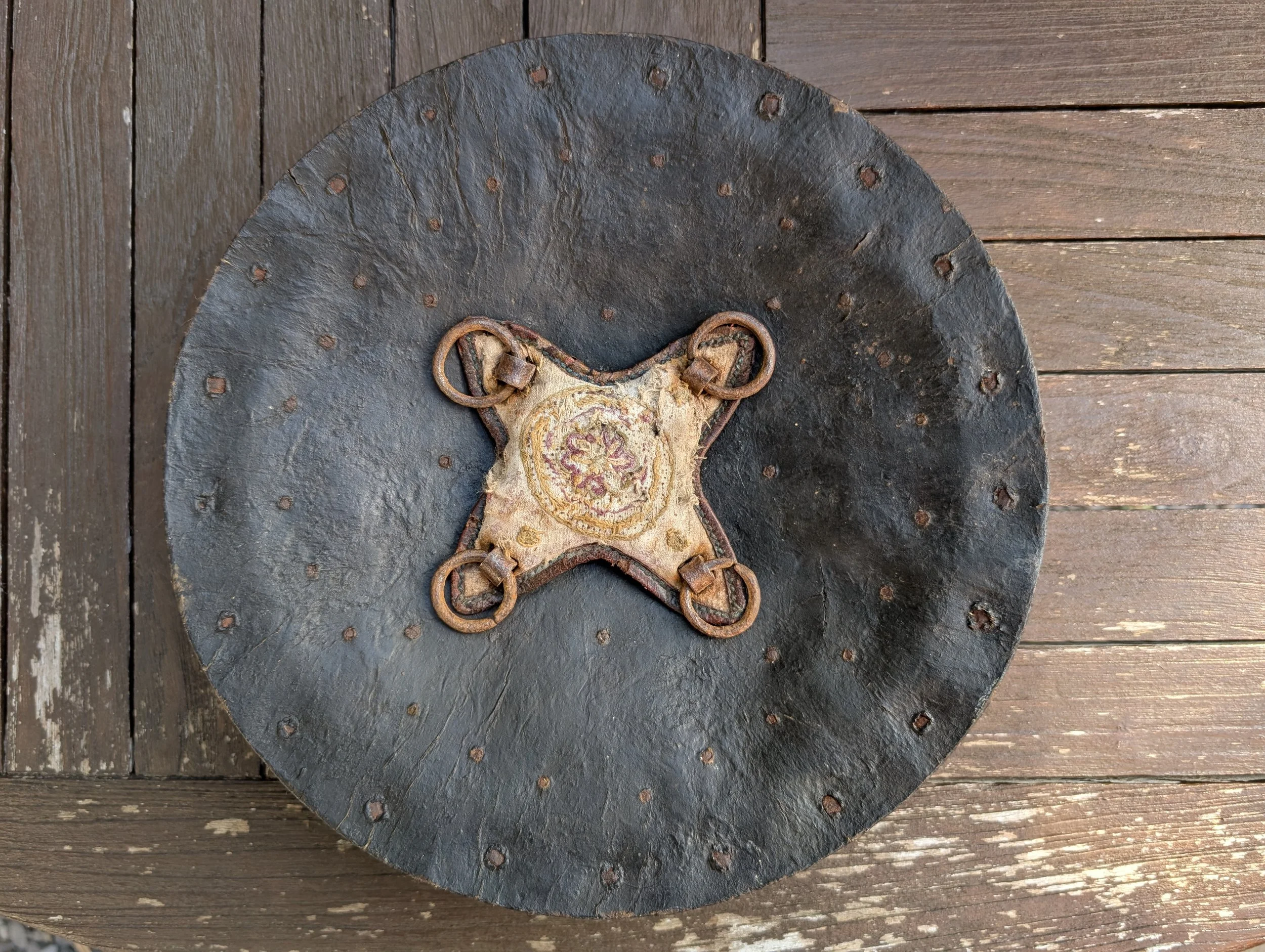
The knuckle-pad has also been cleaned and it shows the remains of its original colourfully stitched decorations, with a leather border.
As well as being a scarcely found historical item, one of the main draws of this shield is that it is a twin of a well-known one in the Met’s outstanding collection in New York. The Museum’s shield (object number: 36.25.601) has the same nuances of manufacture, the same style in every aspect and even the same diameter at 28cm. It was part of the famous bequest of George Cameron Stone, 1935, and even shares a similar condition to the one presented today. This means that both shields were not just produced by the same workshop or atelier, but almost certainly by the same hand, and this is an extremely rare boon to an item’s history, hence why one recently commanded a healthy figure at a London auction recently. Sadly, I only have room for two shields in this part of my collection so I am putting up four for sale, and will withdraw the final two from sale once the first two have sold. If you’d like to read about the history of this type of shield, I have a large article on my Patreon.
SOLD